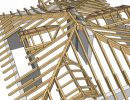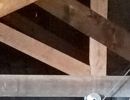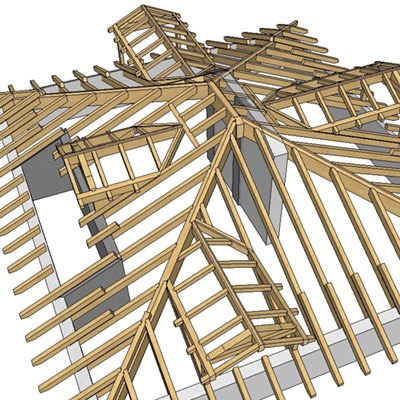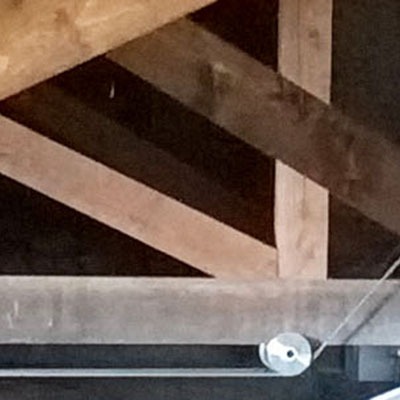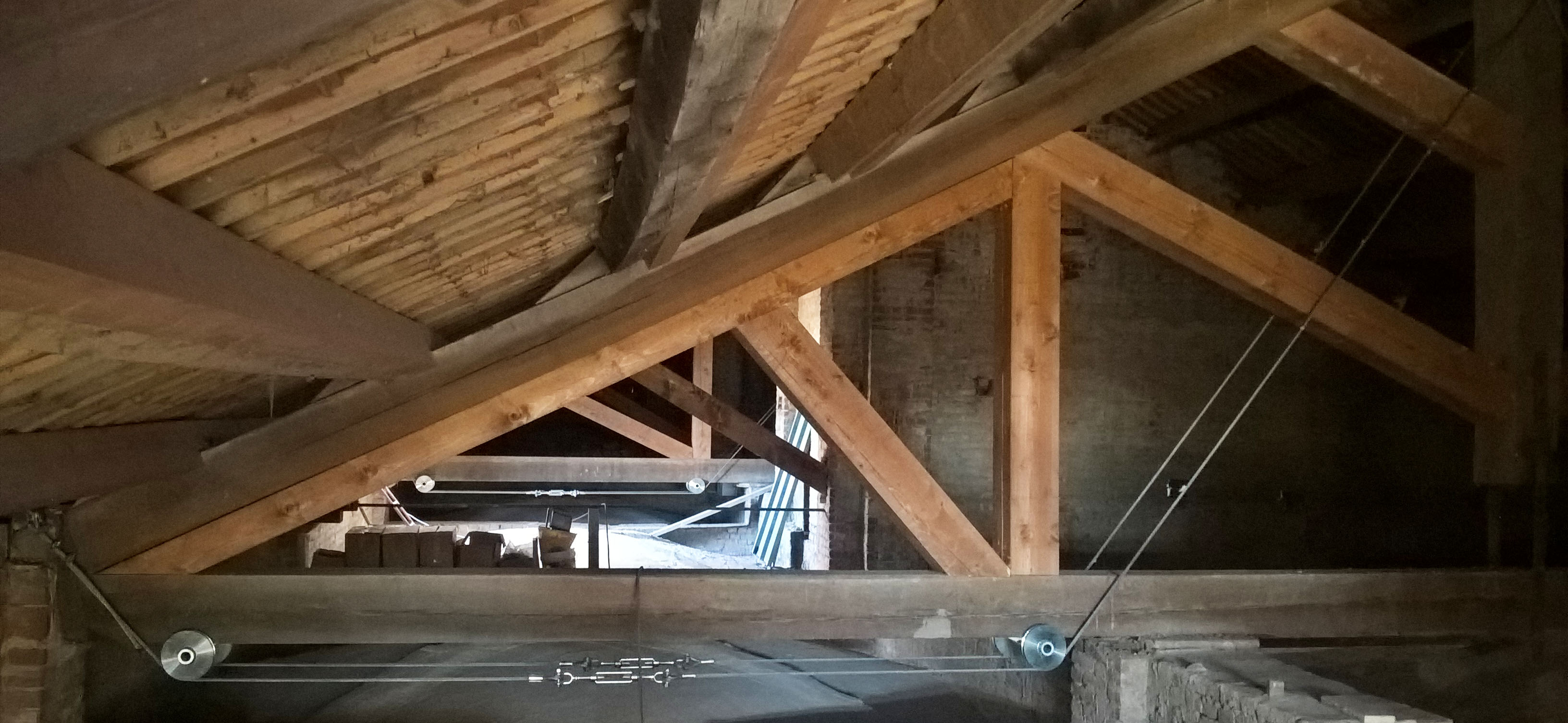
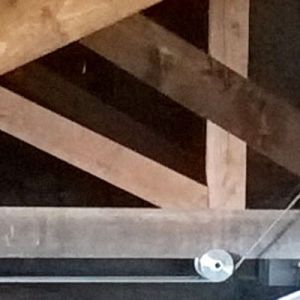
Aside from the countless cases of reinforcing wooden floors using steel connectors and composite decking—a technology that has been in use for at least 20 years—we have worked on specific cases involving the restoration of large historic trusses (as shown in the image above, with a 16-meter span), with the aim of restoring the necessary functionality with minimal intervention.
In the case at hand, several dozen trusses (varying in geometry, spans, state of preservation, localized damage, etc.) were surveyed one by one, with particular attention paid to the condition and dimensions of the metal ties, joints, connections to the masonry, and all those structural details upon which the full reliability of such structures may depends.
Based also on data regarding the quality of the wood (obtained through penetration tests), specific consolidation measures were proposed for each location, involving the addition (or replacement) of missing or irreparable wooden members (sometimes through prosthetic reinforcement), and, above all, proposing seismic retrofitting using post-tensioned steel systems. These interventions are thus reversible, identifiable, and easily monitorable, and are therefore consistent with the general principle of heritage preservation.
The steel tension members help the wooden chains, contain the joints, and control the in-plane deformation of the structural frame. Furthermore, since the fire resistance analyses—conducted using the reduced-section method—do not account for simultaneous dynamic seismic loading, the steel components were not included in the fire resistance analyses and, therefore, can be left exposed, which also enhances the aesthetic quality of the work.
This reinforcement method was also adopted for part of the roofing at the Castello Sforzesco in Vigevano, with the full approval of the relevant cultural heritage Authority.


Foundation and underpinning
Reinforced concrete structures
Timber structures
Masonry reinforcement
Vaults systems reinforcement
Timber subsystems reinforcement
Steel structures

Retaining walls